From HODL to Hauling: How Silicon Valley's Crypto Graveyard Became the Greatest GPU Sale Nobody Advertised
There is a very specific sound that financial delusion makes when it dies. It's not a crash, exactly. It's more of a hum — specifically, the residual hum of approximately forty ASIC miners sitting in a Menlo Park storage unit, still faintly warm, completely forgotten, and legally adjacent to being yours for the taking.
Welcome to the crypto graveyard. Population: more hardware than God, and zero people willing to admit they put it there.
The Anatomy of a Failed Dream (Measured in GPUs)
Let's set the scene. It's 2021. A man named something like Brayden or Kestrel has just liquidated his Series A options, read three Reddit threads, and decided that the path to generational wealth runs directly through a warehouse full of graphics cards running at 100% capacity, 24 hours a day, in a state experiencing rolling blackouts. He spends somewhere between $80,000 and "I don't want to tell my wife" on mining rigs, cooling infrastructure, and a whiteboard covered in moon emojis.
Fast forward to today. Brayden — let's say it's Brayden — has pivoted to AI. Or Web5. Or regenerative ocean farming. The point is, he has pivoted, and he has done so with the full commitment of a man who has never once considered the cost of shipping forty ASIC miners to a recycling facility. So he hasn't shipped them anywhere. They're just... there. In a garage. Or a rented commercial space whose lease ran out six months ago. Or, increasingly, at the curb.
This is where you come in.
What You're Actually Looking For
Before you start loading a U-Haul based on vibes alone, it helps to know what legitimate crypto mining hardware looks like versus what is simply a very ugly computer someone's teenager built. Here's a quick field taxonomy:
ASIC Miners (Application-Specific Integrated Circuits) are the big, loud, hot boxes purpose-built for mining specific cryptocurrencies. Brands like Bitmain's Antminer series or MicroBT's Whatsminer are common. These are single-purpose machines, which means their repurposing options are limited — but they can still be sold to the surprising number of people who are currently in the phase of the cycle that Brayden was in three years ago. The market is eternal. The suckers are renewable.
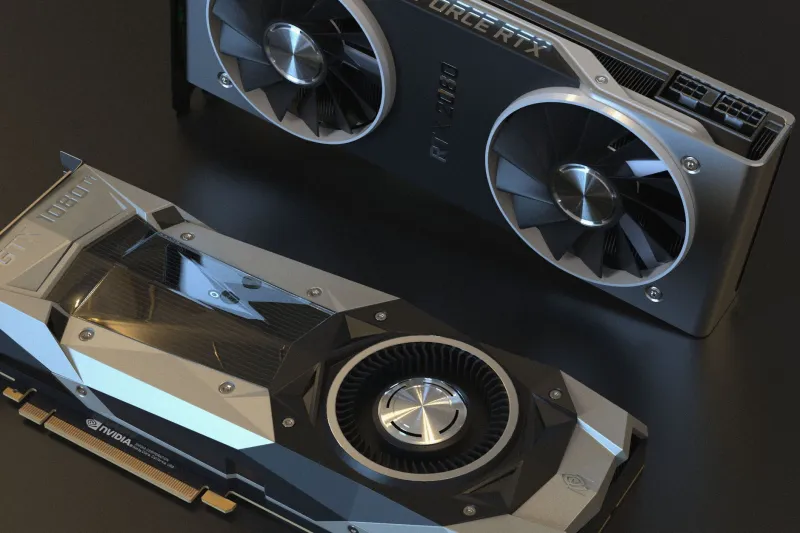
GPU Mining Rigs are the real prize. These are custom-built frames — often literally just metal shelving — loaded with high-end graphics cards from NVIDIA or AMD. Here's the beautiful irony: these GPUs were expensive before crypto, became insane during crypto, and are now sitting abandoned despite being exactly what every PC gamer, 3D artist, machine learning hobbyist, and small business rendering video content desperately wants. A single NVIDIA RTX 3090 card, which a mining rig might have six of, still sells for several hundred dollars on eBay. Do the math. Actually, let me do it for you: it's a lot of money.
Cooling Infrastructure — the industrial fans, immersion cooling setups, and custom racking systems — is unglamorous but genuinely useful if you run any kind of server operation, grow tent, or extremely aggressive home office.
The Hunt: Where Abandoned Ambition Goes to Die
Finding this stuff requires approximately the same skill set as finding any other rich-person discard, with one important modification: you are now operating in the overlap between "physical trash" and "digital shame spiral," which means the usual channels apply but with extra layers of denial.
Facebook Marketplace and Craigslist remain the undisputed champions of crypto hardware desperation. Search terms like "mining rig," "GPU lot," "ASIC," and the deeply poignant phrase "moving, must sell" will surface listings from people pricing their equipment at 15% of what they paid with the exhausted energy of someone who has stopped arguing. Lowball them. They will accept it. They want this chapter to end.
Business liquidation auctions are where the truly industrial-scale operations surface. When a mining company or a "blockchain infrastructure startup" (three guys and a dream) goes under, their assets often end up at commercial liquidators. Sites like B-Stock, GovPlanet, and your local auction house occasionally surface pallets of mining equipment being sold by the pound, essentially. By the pound.
E-waste facilities are the last stop before hardware becomes a legal and moral gray zone, but many legitimate e-waste operations will sell functional equipment rather than shred it. Call ahead. Ask questions. Be charming. Explain that you are doing this for the environment, which is partially true.
The physical neighborhoods — and yes, this is real — of zip codes like 94025 (Menlo Park), 94301 (Palo Alto), and the broader Los Altos Hills corridor occasionally produce curbside hardware during the great seasonal purges. Keep your eyes open around quarter-end, when leases expire and the shame of looking at idle equipment finally outweighs the effort of moving it.
The Risk Assessment Nobody Asked For But Everyone Needs
Let's be honest about what could go wrong, because Rich Garbage Man has a policy of informed treasure hunting.
Electrical hazards are real. Mining rigs run on modified power supplies pulling serious amperage. Do not attempt to fire up rescued equipment without knowing what you're doing, or at minimum, knowing someone who does and owes you a favor.
The "it still works" problem: sometimes you rescue a rig, sell the GPUs, and discover mid-disassembly that you've created a situation requiring more technical knowledge than you currently possess. YouTube exists. Use it.
Emotional entanglement: there is a small but nonzero chance that the person whose equipment you've acquired will, upon seeing their former rig listed on eBay, experience a grief response and contact you. This is rare. Handle it with grace and a firm understanding of how property abandonment works legally in your state.
The "next bubble" trap: do not, under any circumstances, fire up the miners yourself and decide to get into crypto. That is not this article's purpose. We are here to profit from the bubble, not to become the bubble. Stay focused.
The Resale Math (The Fun Part)
A six-GPU mining rig, fully intact, might cost you $200 at a distressed liquidation sale. Stripped for parts — the GPUs sold individually, the power supplies resold, the frame listed to someone building a new rig — that same unit can return $800 to $1,400 depending on current GPU market conditions and your patience with shipping fragile electronics. That's not a get-rich-quick scheme. That's a get-moderately-richer-than-you-were-this-morning scheme, which is frankly more sustainable.
The GPU market specifically rewards anyone willing to do the unsexy work of testing, photographing, and honestly describing used hardware. "Pulled from mining rig, tested, works" is a complete and compelling eBay listing. People will buy it. The PC gaming community's relationship with GPU scarcity is deep, personal, and ongoing.
In Conclusion: One Man's Abandoned Blockchain Is Another Man's Budget
The cryptocurrency boom was, among other things, an extremely expensive lesson in the difference between "this will definitely work" and "this worked for thirty seconds on a podcast." The hardware it left behind, however, is entirely real, entirely functional in many cases, and distributed across California's wealthiest ZIP codes with the quiet desperation of a fever dream that nobody wants to discuss at dinner parties.
Brayden has moved on. The machines have not.
Go get them.