Fern Funeral: The Six-Month Lifecycle of Rich People's Plant Obsessions (And How to Inherit the Remains)
Let us observe a moment of silence for the monstera deliciosa. Not because it's gone — it is absolutely not gone, it's basically unkillable — but because it has committed the one unforgivable sin in the influencer home décor economy: it became accessible. The second a plant appears at Target, it is spiritually dead to anyone who spent $400 acquiring it from a specialty nursery in Portland. The pottery it came in will be donated within weeks. The plant itself will be composted, gifted to a housekeeper, or simply left to survive on its own recognizance in a corner of the mudroom that nobody photographs.
This is the lifecycle. It is reliable, it is cyclical, and if you understand it, you can furnish an entire home with cast-off botanical luxury for approximately the cost of a decent dinner.
The Trend Pipeline Explained (For Those Who Don't Follow Plant Influencers, You're Welcome)
Here's how it works, compressed into its essential mechanics:
Somebody with 800,000 Instagram followers posts a corner shot. In the corner: a rare plant — let's say an Alocasia zebrina, or a variegated Monstera Thai Constellation, or whatever the current darling happens to be. The plant is sitting in a handmade ceramic pot from a small studio in Vermont or Oaxaca or literally anywhere that can be described as "artisan." The light is perfect. The followers lose their minds.
Within three months, the plant is being sold at Trader Joe's. Within four months, it's in a TikTok that describes it as "overrated." Within six months, the original influencer has pivoted to a completely different aesthetic — we are now in a Japandi phase, or a "desert modernism" phase, or a brief and confusing "grandmillennial" phase — and the Alocasia zebrina is now a problem to be solved rather than a status symbol to be maintained.
The handmade ceramic pot? It's going to the church rummage sale. The plant? Depends on how attached the housekeeper got.
Current Trends Approaching Their Expiration Date
In the spirit of public service, let's do a quick triage of what's currently in the late stages of its influencer lifecycle and therefore about to flood the secondary market:
The Fiddle-Leaf Fig. It had a long run. Genuinely impressive. But it's been appearing in staged photos for Airbnb listings since at least 2019, which means it has achieved the ultimate indignity: it is now associated with rental property décor. Wealthy homeowners who paid $250 for a mature specimen are already quietly moving them to rooms that don't get photographed.
Terracotta everything. The terracotta pot had a beautiful moment. Warm, earthy, accessible — which is exactly the problem. When accessibility becomes the aesthetic, the aesthetic dies for the people who started it. Expect a wave of perfectly good terracotta pottery to hit thrift stores in the next two quarters.
The "Maximalist Jungle" interior. This one is going to generate the most spectacular carnage when it falls, because it requires so much stuff. We're talking rooms with thirty-plus plants, hanging macramé, multiple specimen-grade statement plants, and approximately eleven different kinds of basket. When the person who assembled all of that decides they're now minimalist, the resulting donation pile is basically a botanical garden liquidation.
Dried pampas grass. It's over. It was over in 2022. If you still have it, that's between you and your interior designer. If someone is giving it away, take it — there's apparently a robust Etsy market for vintage pampas, which is a sentence that could only exist in the current decade.
Where to Find the Remains
The good news: botanical cast-offs are among the easiest luxury discards to locate, because plants require care, and when wealthy people decide they don't want to provide that care anymore, they need to offload fast.
Facebook Marketplace has become the premier venue for this particular category of regret. Search your area for rare plants and filter by price — anything listed under $30 for a plant that retailed over $100 is a motivated seller. Cross-reference with plant identification apps to make sure you know what you're actually buying.
Local buy-nothing groups in wealthy neighborhoods are extraordinary. In affluent communities, the buy-nothing group functions less as mutual aid and more as a rotating luxury goods library. Rare plants, designer pots, grow lights, humidifiers — all of it cycles through these groups with remarkable regularity when the aesthetic shifts.
Specialty nurseries that serve high-end clientele will often take back plants on consignment or accept donations from clients who are redecorating. Ask. The worst they can say is no, and the best case is that you walk out with a $600 Monstera Thai Constellation for $80 because someone's interior designer told them white walls and nothing else is the new direction.
Estate sales in design-forward neighborhoods — Brooklyn, Silver Lake, Wicker Park, Bucktown, the hipper suburbs of Austin — will occasionally include specimen plants in the inventory. These are underpriced almost universally because most estate sale companies don't specialize in botanical valuation.
The Pottery Is Actually the Point
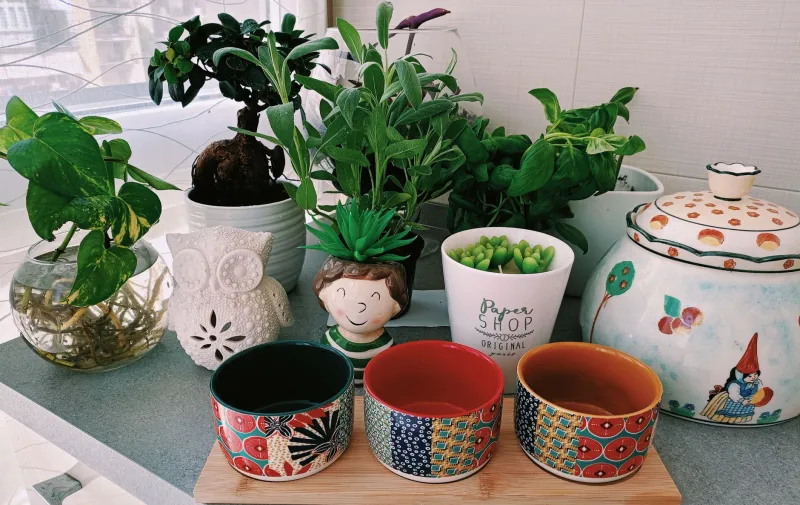
Here's a secret the plant people know but don't advertise: the container is often worth more than the plant. Artisan ceramics from notable studio potters — the kind that get featured in Architectural Digest before they sell out — are quietly appreciating assets. A pot from a well-regarded ceramicist that retailed for $180 in 2021 might be worth $300 today, if you know who made it.
Look for maker's marks on the bottom of any ceramic you encounter at sales or in donation bins. Do ten minutes of research. You will occasionally find something genuinely valuable. More often you'll find something beautiful that was simply expensive, which is a different thing but still worth having.
A Final Note on Plant Care
If you're going to rescue these things, you do need to keep them alive. The irony of acquiring a rare Alocasia only to kill it through neglect is not lost on us — it is, in fact, the entire cycle starting over again. Don't be the next wealthy person who composted a $400 plant because they got bored. Be the person who figured out watering schedules and grew something extraordinary for almost nothing.
The plants don't care about aesthetics. They just want water and indirect light. In that way, they're considerably more reasonable than the people who keep abandoning them.