Dumpster Cordon Bleu: The Only Recipe Guide You'll Ever Need (Inspired by What New York's Finest Restaurants Throw Away)
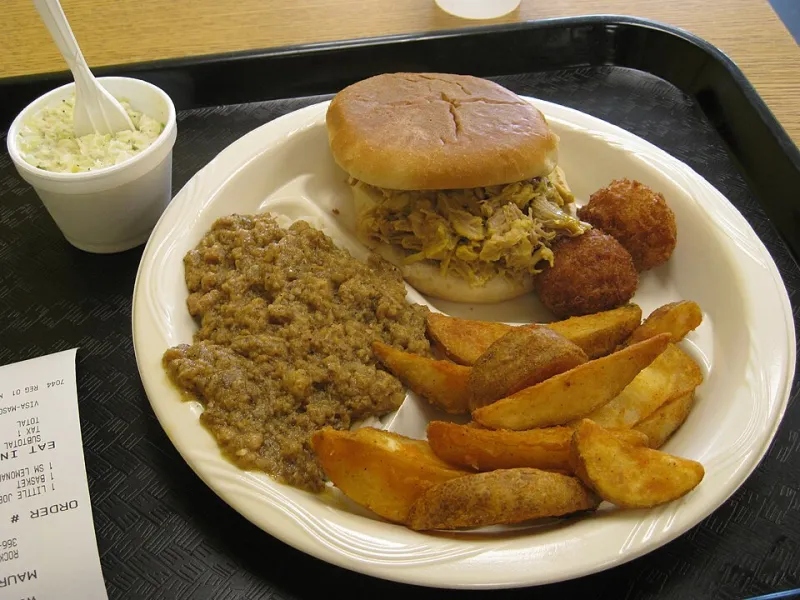
Photo: Nathan Cardozo, CC BY-SA 2.0, via Wikimedia Commons
Every year, the United States throws away approximately 80 million tons of food. Eighty. Million. Tons. That's enough to fill the Empire State Building roughly 91 times, which is a statistic that sounds made up but is, heartbreakingly, not.
Now here's where it gets interesting — and by interesting, we mean simultaneously hilarious and depressing in the specific way that only American excess can achieve. A significant portion of that discarded food comes not from struggling households scraping by on tight budgets, but from high-end restaurants, luxury grocery chains, and the kinds of specialty food purveyors that charge $28 for a jar of artisanal mustard.
Yes. The fancy places. The truffle-oil places. The places with a dress code.
Welcome to Dumpster Cordon Bleu, the only culinary guide that turns capitalism's most embarrassing contradictions into something you could theoretically serve at a dinner party. (We said theoretically. Please don't actually serve your dinner party guests food from a dumpster. We have lawyers.)
A Note on Sourcing (The Most Pretentious Sentence We've Ever Written)
Before we get into the recipes — and we use that word with the same creative looseness that a Tribeca restaurant uses the word "deconstructed" — let's talk sourcing.
High-end grocery stores like Whole Foods discard staggering quantities of perfectly edible food daily. Prepared foods, produce that's one day past peak aesthetic perfection, bakery items that didn't sell — all of it goes. Luxury restaurants in Manhattan, Malibu, Aspen, and every other zip code where people wear linen unironically, similarly generate mountains of premium food waste: trimmed wagyu fat, day-old sourdough from $18-a-loaf bakeries, slightly wilted microgreens that cost more per ounce than silver.
We're not suggesting you go dig through their dumpsters. (Again: lawyers.) We ARE suggesting that the sheer absurdity of this situation deserves to be celebrated, satirized, and turned into a fake recipe column. Which is exactly what we've done.
Recipe #1: The Upper East Side Tasting Menu (Serves: Your Ego)
Concept: A seven-course meal inspired entirely by the trim and waste generated by a single evening's service at a restaurant where the tasting menu costs $350 per person.
The Dish: Pan-Seared Wagyu Fat Croutons on a Bed of Yesterday's Micro-Arugula with a Reduction of Wines Nobody Finished
What You'd Actually Need:
- The fat trimmings from wagyu beef (which a high-end steakhouse in Midtown generates roughly 4 pounds of per service)
- Microgreens that are 24 hours past "peak visual presentation" (they taste identical; the chef just won't plate them)
- Leftover wine from tables where guests ordered bottles and didn't finish (a phenomenon so common that some NYC restaurants have entire programs to repurpose it)
The Tongue-in-Cheek Method: Render the wagyu fat into the croutons of your dreams. Toss the perfectly-fine-actually microgreens with whatever vinaigrette you have. Reduce the wine into something that sounds fancy when you describe it as a "jus." Plate it on something white and asymmetrical. Take a photo. Post it. Caption it: "Elevated simplicity." Watch people ask for the restaurant's name.
Pairs With: The quiet satisfaction of knowing this entire dish cost someone else $340 and was then thrown away.
Recipe #2: The Malibu Beach House Brunch (Serves: Your Instagram)
Concept: Inspired by the contents of a luxury vacation rental's refrigerator the morning after a celebrity's birthday party.
The Dish: Deconstructed Smoked Salmon Scramble with Truffle Cream Cheese and Brioche That Was Definitely From a Very Good Bakery
The Story: A Malibu catering company, after a high-end event, discards: half a side of wild-caught Alaskan smoked salmon (because the display was "too picked over" for aesthetic repurposing), three-quarters of a tub of truffle cream cheese, and an entire brioche loaf that was sliced but not fully consumed.
This is not a hypothetical. Catering companies routinely discard this category of food after events because health codes, liability concerns, and the general attitude of "we can't use that again" conspire against common sense.
The Method: You already know how to make a smoked salmon scramble. You don't need us. The point is that somewhere in Los Angeles right now, there is perfectly magnificent smoked salmon on its way to a landfill, and we feel it is our journalistic duty to acknowledge this tragedy with maximum irony.
Pairs With: Bottomless mimosas made from the three bottles of Veuve Clicquot that the caterer couldn't legally serve after the event ended.
Recipe #3: The Artisanal Brooklyn Deli Situation (Serves: Your Sense of Justice)
Concept: The average artisanal deli in Brooklyn — the kind with exposed brick and a chalkboard menu and a guy named Chet who really wants to tell you about the cheese — throws away an amount of charcuterie at closing time that would make a French butcher physically ill.
The Dish: Charcuterie Board of Temporal Injustice — prosciutto that's a few hours past display-case prime, cornichons from a jar that got opened for one person's sandwich, and three types of cheese that sat out during the lunch rush and are now, technically, "not for sale."
The Method: Arrange everything on a large wooden board. Add some grapes. Light a candle. Charge your friends $45 each and tell them it's a "curated experience."
Pairs With: The knowledge that this exact board, in its original retail form, would have cost $180 at said Brooklyn establishment.
Recipe #4: The Whole Foods Produce Aisle Elegy (Serves: 4, Plus Your Conscience)
Concept: Whole Foods — and we say this with love, or something adjacent to love — discards produce with the enthusiasm of someone who has never experienced food insecurity. A banana with a brown spot? Gone. A mango that's slightly softer than optimal? Farewell. A perfectly good bell pepper that got a small scuff during transit? Into the void.
The Dish: Roasted Vegetable Medley of Cosmetic Imperfection — a beautiful, deeply flavorful roasted vegetable situation made entirely from produce that failed aesthetic standards.
The Method: Roast everything at 425°F until caramelized and magnificent. The slight scuff on the bell pepper will not survive the oven. The brown spot on the banana has been irrelevant since the 1970s. Season aggressively. Finish with olive oil that probably costs more than your electric bill.
Pairs With: Righteous fury about the fact that roughly 30% of all produce in America never gets eaten.
Recipe #5: The Tasting Menu Finale (The Dessert Course Nobody Asked For But Everyone Needed)
The Dish: Deconstructed Existential Crisis with a Chocolate Ganache and a Garnish of Perspective
This final course requires no ingredients. It is simply the moment you sit with the full weight of the preceding four recipes and acknowledge that in a country where 34 million people experience food insecurity, we are also a country that throws away $28 artisanal mustard because the label got smudged.
It's not a comfortable dessert. It doesn't pair well with anything. But it is, arguably, the most important thing on the menu.
Presentation: Serve at room temperature. Garnish with a single, unresolved question about your own consumption habits.
The Takeaway (The Actual One, Not the Food Kind)
The absurdity we've been gleefully roasting throughout this piece — and we have enjoyed every second of it — sits on top of something genuinely worth thinking about. Food waste is one of the most solvable crises in America, and yet we solve it at approximately the rate we solve everything else: slowly, partially, and with a lot of very earnest podcasts.
Organizations like Food Rescue US, City Harvest in New York, and food banks across the country work hard to redirect exactly the kind of high-end food waste we've been joking about here. Apps like Too Good To Go connect consumers with restaurants selling surplus food at steep discounts. It's not a full solution, but it's something.
In the meantime, we'll be here at Rich Garbage Man, finding the humor in the gap between what we throw away and what we pretend to value — and suggesting, with all due irony, that maybe the most gourmet thing you can do is pay attention.
The Rich Garbage Man test kitchen does not have a test kitchen. Please do not eat food from dumpsters. Please do feel free to be angry about how much perfectly good food we throw away every single day.