Curb Appeal: The Underground World of Luxury Trash Picking (And How to Explain That Chanel Bag to Your Book Club)
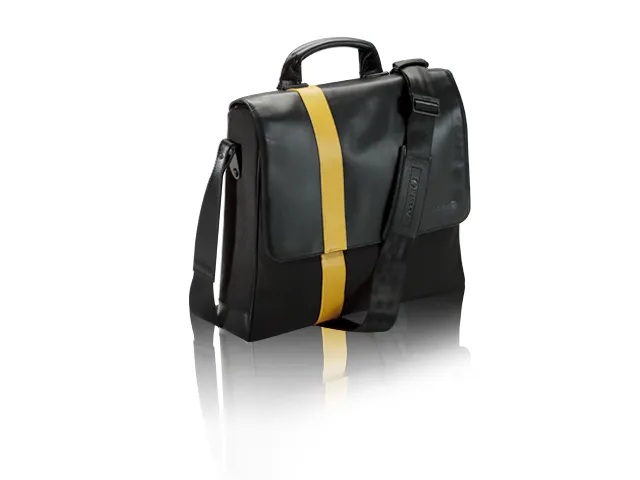
Photo: Jochen70, CC BY-SA 3.0, via Wikimedia Commons
There is a moment — sacred, almost spiritual — when you're standing on a tree-lined street in the 90210 zip code at dawn, and you realize that the Louis Vuitton duffle bag sitting next to someone's recycling bin is, in fact, real. Not a knockoff. Not a fever dream. Real. Monogrammed. Slightly scuffed on one corner because, presumably, wealthy people are just as clumsy as the rest of us.
Welcome to the glamorous, ridiculous, and surprisingly profitable world of designer dumpster diving — or, as those of us in the know prefer to call it, luxury urban foraging. It sounds better at dinner parties.
The Trash Doesn't Lie (But the Rich Sure Do)
Here's a fun fact that the financial advisors at Goldman Sachs probably don't put in their quarterly reports: Americans throw away an estimated $62 billion worth of usable goods every single year. And a disproportionate chunk of that number lives in neighborhoods where the median home value has more commas than a Cormac McCarthy novel.
The wealthy, bless their hearts, have a complicated relationship with their stuff. They acquire it furiously, display it proudly, grow bored of it almost immediately, and then — rather than donating it like the rest of us — they simply put it on the curb. No garage sale. No eBay listing. No tearful farewell. Just: sidewalk. Tuesday. Gone.
This is not a theory. This is a documented lifestyle choice.
Take Marcus, a 34-year-old graphic designer from Brooklyn who discovered the Upper East Side's trash day schedule the way most people discover their best recipes — by accident and hunger. "I was walking home from a job interview in 2019 and I saw a Dyson vacuum still in the box just sitting there," he told us, with the thousand-yard stare of a man who has seen things. "That was the day my whole worldview shifted."
Marcus now runs a modest side hustle reselling items he finds in Manhattan's wealthiest neighborhoods, and last year he cleared just over $14,000 from things people literally threw away. His most impressive single score: a pair of Hermès throw pillows — yes, those Hermès — valued at roughly $600 each. They were in a garbage bag. A garbage bag.
Timing Is Everything: The Dumpster Diver's Calendar
If you're going to do this — and we're not saying you should, but we're absolutely not saying you shouldn't — you need to understand the rhythm of rich-people trash. It has a schedule. It has seasons. It practically has a dress code.
Post-Holiday Purges (January): The week after New Year's is basically Black Friday for urban foragers. Wealthy households receive gifts they'll never use, decide their living spaces look cluttered, and conduct what can only be described as a full-scale material reckoning. Electronics, clothing, kitchenware — January curbs are practically a department store.
Spring Cleaning Season (March–April): This one is self-explanatory. Rich people spring clean like they're preparing for a magazine shoot, which means anything that doesn't spark joy — and plenty of things that probably should — ends up outside.
Post-Renovation Weeks: Keep an eye on construction permits in your city (yes, these are public record, and yes, you're welcome). When a wealthy household finishes a renovation, the old furniture — sometimes barely used, often designer — gets replaced wholesale. We're talking mid-century modern sofas, barely-touched Sub-Zero appliances, and tile that costs more per square foot than your car payment.
Moving Day: Nothing unlocks a wealthy person's generosity quite like the logistical nightmare of a cross-country move. When it's cheaper to buy new furniture in California than to ship your current furniture from New York, the New York furniture goes to the curb. Simple math. Extraordinary outcomes.
The Etiquette Nobody Talks About
Now, before you load up your hatchback and head to Beverly Hills with a flashlight and a dream, let's talk about the social contract of curb picking — because yes, there is one, and violating it will get you judged harder than wearing Crocs to a Michelin-starred restaurant.
Rule One: Once it's on the curb, it's fair game. In most US municipalities, items placed on the public curb for trash collection are legally considered abandoned property. You are not stealing. You are rescuing. There is a difference, and you should repeat this to yourself as needed.
Rule Two: Leave the area cleaner than you found it. If you dig through a bag and don't want something, put it back. You are a luxury urban forager, not a raccoon. Conduct yourself accordingly.
Rule Three: Don't be weird about it. If the homeowner comes outside and sees you, smile, wave, and say something breezy like, "Oh, I just love this piece — do you mind?" Most wealthy people will be charmed that their discarded item is being appreciated. Some will be horrified. Either reaction is honestly fine.
Rule Four: The early bird gets the Birkin. We're not joking. Serious foragers are out before sunrise. If you're rolling up at 10 AM expecting to find untouched treasures, you're adorable, but you're also wrong.
How to Explain Your New Hermès Bag
Ah. The social minefield. You've done it. You've found something spectacular — a designer handbag, a vintage watch, a cashmere coat that retails for more than your rent — and now you have to explain it to your friends, your coworkers, and your mother-in-law who is very particular about these things.
Here are your options, presented in ascending order of commitment:
- The Vague Truth: "I found it." Short. Accurate. Leaves room for interpretation.
- The Estate Sale Redirect: "It came from an estate sale." Technically, rich people's trash is a kind of estate situation. Morally flexible, but effective.
- The Full Disclosure: Tell the whole story. Honestly? People love this one. "I found this Hermès bag in a trash bag on the Upper East Side" is a great dinner party story. It's funny. It's relatable. It makes you seem resourceful and interesting rather than desperate.
- The Confident Deflection: Simply carry the bag. Say nothing. Dare someone to ask.
The Bigger Picture (Since We're Already Here)
Look, there's something genuinely absurd about a society where one person throws away a $3,000 handbag while another person can't afford groceries. We're not going to pretend that dumpster diving solves wealth inequality, because it doesn't. But there is something quietly radical about refusing to let perfectly good things go to waste — about insisting that value doesn't disappear just because someone with a bigger closet got bored.
Plus, you might find a Dyson vacuum.
And honestly? That's not nothing.
Rich Garbage Man does not endorse trespassing, private property violations, or explaining suspicious acquisitions to law enforcement. We do, however, fully endorse finding a Hermès throw pillow in a garbage bag and feeling absolutely no guilt about it whatsoever.