Ghost Subdivisions: The Billionaire Bust Towns Where the Marble Countertops Are Still Waiting for You
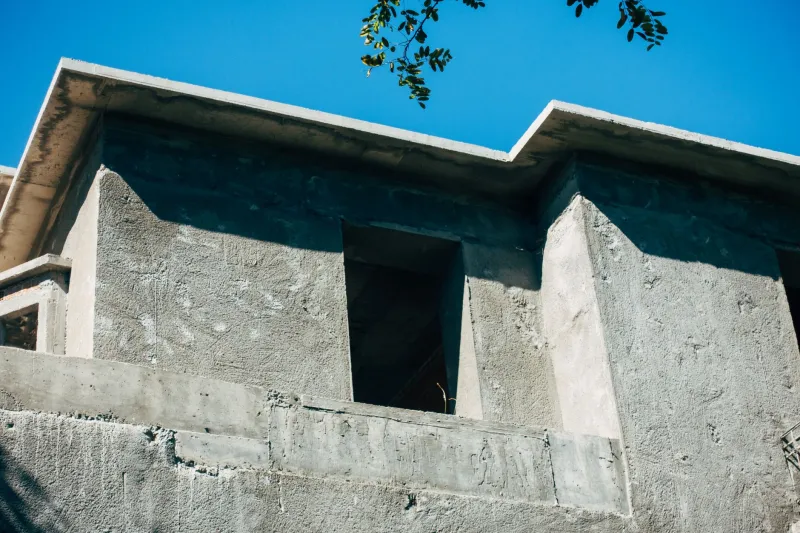
Picture this: A gated entrance with a tasteful brick pillar, a wrought-iron sign that reads something like "Estates at Whispering Pines Reserve," and then — absolutely nothing. A dirt road. A few concrete slabs. Maybe a partially framed colonial with Tyvek wrap flapping in the wind like a ghost's laundry. Somewhere inside, still shrink-wrapped in the garage bay of a home that will never be finished, sits $40,000 worth of Kohler plumbing fixtures and a set of custom mahogany interior doors that were ordered from a mill in Vermont before the developer's LLC quietly dissolved.
Welcome to Ghost Subdivision Season. Population: you, if you're paying attention.
The Beautiful Lifecycle of a Failed Dream Community
Here's how this story always goes. A developer — let's call him Brad, because it's always a Brad — secures financing during a period of irrational optimism. He purchases several hundred acres of exurban land, commissions an architect to design a 47-lot "luxury enclave," and immediately orders premium materials for the model home and the first six spec builds. Copper roofing. Solid-core doors. Radiant floor heating systems still in their original packaging. Anderson windows, plural, stacked in a warehouse.
Then the interest rates move. Or the permits get complicated. Or Brad's private equity backers decide they'd rather lose money on a streaming service. The project stalls. The construction crew disappears. The model home sits in various stages of completion while the HOA documents gather dust in some paralegal's filing cabinet.
This is your moment.
Failed residential developments across the United States have quietly become one of the most underappreciated sources of premium architectural salvage in the entire country. We're not talking about crumbling Victorians or mid-century ranches with avocado-colored appliances. We're talking about new construction — materials that were purchased at full luxury retail price, installed partially or not at all, and are now subject to bank liquidation, estate proceedings, or the kind of chaotic creditor auctions that make your average thrift store look like Bergdorf Goodman.
Where the Bodies Are Buried (Architecturally Speaking)
The 2008 financial crisis left a trail of ghost subdivisions from the Inland Empire of California to the outer rings of Phoenix, Las Vegas, and virtually every Florida county that ends in the word "Beach." Places like Lehigh Acres, Florida became internationally infamous — a flat, sun-baked grid of empty lots and half-completed homes that looked, from above, like a Monopoly board someone had rage-quit mid-game.
But the dirty secret of the post-2020 real estate frenzy is that it created an entirely new generation of failed luxury projects. Developers who broke ground in 2021 on ambitious "ultra-premium" communities are now facing a very different lending environment. Projects in suburban Tennessee, the outskirts of Austin, and the second-ring suburbs of Nashville are quietly stalling. Bank foreclosures on partially completed luxury spec homes are already ticking upward.
The salvage professionals who work these sites — and yes, this is absolutely a profession, populated by people who drive large trucks and speak fluent "lien release" — will tell you that the 2024-2026 window is going to be extraordinary. "The spec builds from 2021 and 2022 had insane material budgets," one Texas-based architectural reclamation dealer told us, gesturing toward a pallet of quartzite slab he'd recently acquired from a stalled Frisco development. "Developers were trying to hit $800-a-square-foot price points. That means everything inside is serious."
What Actually Gets Left Behind (And Why It's Glorious)
Let's talk specifics, because vague optimism doesn't fill a flatbed truck.
Plumbing fixtures are the crown jewels of failed luxury construction. Developers ordering for high-end spec homes aren't buying builder-grade anything. They're ordering Brizo, Waterworks, and signature Kohler lines. When a project collapses mid-rough-in, those fixtures — still boxed, still warranted — end up in liquidation at fractions of retail. A freestanding soaking tub that retails for $6,000 moves at a creditor auction for $400 when nobody's paying attention.
Flooring materials are similarly spectacular. Wide-plank white oak. Large-format porcelain tile in those aggressively trendy 48x48 formats. Hand-scraped hardwood. Engineered hardwood with exotic veneers. These materials get ordered in bulk for multiple units, meaning when the project fails, there are pallets of the stuff sitting in a warehouse or, occasionally, just stacked in an unfinished garage.
Millwork and cabinetry deserve their own category of reverence. Custom cabinet orders for luxury spec homes are often placed with small regional shops that build to specification. When the developer can't pay, those cabinets sometimes sit in the shop, sometimes get delivered to a shell of a house, and sometimes end up in a storage unit that gets auctioned on one of those reality TV shows your aunt watches.
Structural and exterior elements — copper gutters, hand-forged hardware, custom steel railings, stone veneer, architectural roofing materials — round out the haul. A partially constructed luxury home is basically a building materials museum that nobody locked the door on.
How to Actually Find These Places Without Getting Arrested
This is the part where we have to be responsible adults for approximately two paragraphs.
The single best legitimate pathway into failed development salvage is through bank-ordered liquidation auctions. When a lender forecloses on a partially built project, they frequently hire auction companies to dispose of materials on-site or in a warehouse. Firms like Tranzon, Williams & Williams, and various regional outfits run these sales constantly. Creating accounts on their platforms and setting alerts for your region costs nothing and pays dividends.
County courthouse records are your reconnaissance tool. Mechanics liens filed against a development project are public record and are essentially a flashing neon sign that reads "this project is in trouble." A developer with six active liens from subcontractors is a developer who may soon be parting with materials at court-ordered prices.
Architectural salvage dealers — the professional class who already do this for a living — are also worth cultivating as relationships. They often know about upcoming liquidations before they're publicly listed and occasionally have more material than they can move efficiently. Becoming a known buyer in that ecosystem opens doors that Google cannot.
As for wandering onto a half-built site uninvited: don't. Beyond the obvious legal issues, half-built luxury homes are legitimately dangerous environments. The floors aren't finished. The stairs might not be attached. There is a non-trivial chance of meeting a security camera, a watchman, or a very territorial subcontractor who still hasn't been paid and is not in a generous mood.
The Rich Garbage Man Philosophy Applied to Drywall
There's something almost poetic about the failed McMansion development as a cultural artifact. It represents the absolute apex of aspirational excess — a project conceived entirely in the language of more, abandoned before anyone ever got to live in it, and ultimately redistributed at pennies on the dollar to people who simply showed up.
The marble that was meant to impress dinner guests at a $2 million home in a subdivision that never got its second entrance road? It's going to look extraordinary in your kitchen. The custom steel pivot door that was going to be the statement piece of a spec home that never sold? It fits a standard opening with some modification and costs less than a new Honda Civic.
Brad lost his shirt. You got a pivot door.
That's not schadenfreude. That's the market working exactly as intended.