Dead in the Water: How America's Bored Billionaires Keep Accidentally Stocking the World's Greatest Boat Lot
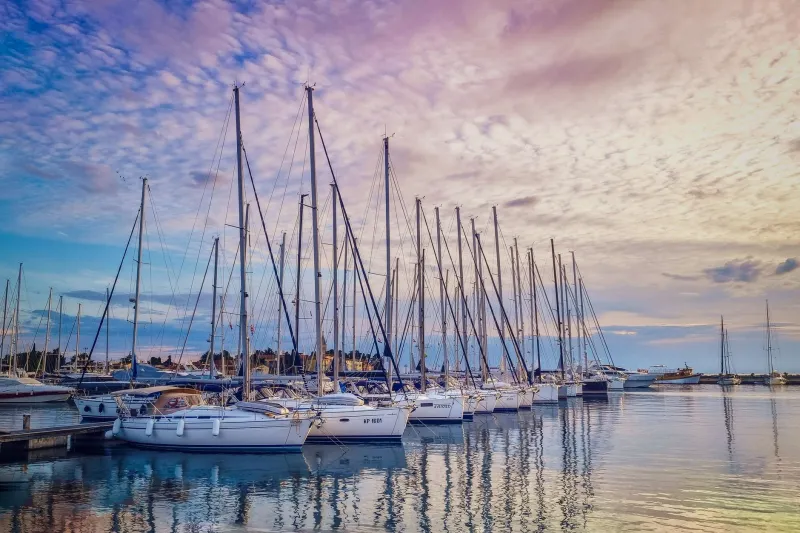
There is a marina somewhere in Connecticut right now — let's call it by its spiritual name, which is Regret Harbor — where a 58-foot sloop is sitting in its slip for the fourteenth consecutive month. It has been provisioned exactly once. Its owner, a hedge fund manager who spent $1.2 million on it during a particularly aggressive "finding myself" phase, has since found himself in Aspen, then Tulum, then deeply invested in competitive pickleball. The boat remains. The dock fees accumulate. And slowly, inevitably, it drifts into your price range.
Welcome to the secondary market for luxury watercraft — the single most underappreciated bargain ecosystem in American consumer culture, and proof that the rich will buy literally anything if you put a nautical theme on it and charge enough for it to feel meaningful.
The Anatomy of a Rich Person Boat Purchase
To understand why so many expensive boats end up on the auction block with the dignity of a wet labrador, you need to understand the psychology behind buying one in the first place. Nobody wealthy buys a boat because they love boats. They buy a boat because they attended a regatta, had three glasses of very good rosé on someone else's vessel, and decided that the version of themselves who owns a 45-foot catamaran is the real them.
This person is not the real them. The real them gets seasick somewhere around the third nautical mile and strongly prefers climate-controlled environments with reliable Wi-Fi. But by the time that information becomes available, a wire transfer has already cleared and a boat broker somewhere is buying his second vacation home.
The average luxury boat, according to people who track these things professionally and with great sadness, gets used approximately 14 days per year. For vessels north of $500,000, that number drops closer to seven. You are, in other words, looking at a floating storage unit that someone is actively paying to keep wet.
Where the Boats Actually Go
When the fantasy finally collapses — and it always collapses, usually right around the time the owner gets the first engine maintenance invoice — the boats begin their migration through a surprisingly organized secondary market.
Marina foreclosures are your first hunting ground. When dock fees go unpaid long enough, marinas have the legal right to claim the vessel and auction it off. This happens more than you'd think, particularly in the $200,000–$800,000 range, where owners are wealthy enough to afford the initial purchase but not quite wealthy enough to absorb the ongoing costs without noticing them. The US Marshals Service also conducts boat auctions regularly, because it turns out that yachts are a preferred asset class among people who make money in ways that eventually attract federal attention.
Yacht brokers with the dead-eyed look of men who've seen too much are your second resource. These are professionals who have watched a client spend $900,000 on a vessel, use it for one Fourth of July weekend, and then list it two years later at $580,000 "motivated to sell." They know which boats have been sitting. They know which owners have moved on to aviation or ceramics or whatever the current rich-person escape hatch is. Buy them a drink and they will tell you things.
Boat shows in February are criminally underutilized. Everyone thinks boat shows are for buying new boats. The savvy among us know that the last day of a major boat show — when dealers are staring down the cost of shipping inventory back — is when prices enter a kind of beautiful freefall.
The Jet Ski Graveyard Nobody Talks About
If a 60-foot yacht is out of your budget (reasonable), allow us to direct your attention to the jet ski and personal watercraft market, which is the nautical equivalent of finding a Rolex in a shoebox at an estate sale.
Personal watercraft depreciate like a stone dropped from a great height. A brand-new Sea-Doo or WaveRunner that retailed for $18,000 can be found two seasons later, barely used, for $7,000 or less — because the wealthy family that bought four of them for their lake house has since discovered that jet skiing is extremely loud and somewhat exhausting, and they've pivoted to paddleboarding, which is quieter and photographs better for Instagram.
Storage facilities near any major lake or coastal area are quietly lousy with this stuff. Call them. Seriously, just call the storage facilities near water and ask if they have any units up for auction. You will be shocked.
Timing Is Everything (And The Calendar Is Your Friend)
The luxury boat market breathes in a very predictable rhythm, and once you understand it, you can time your shopping with the precision of a man who definitely did not just spend $40 on a nautical almanac from a yacht foreclosure sale.
Late September through November is the golden window in northern states, when owners are winterizing and reckoning with the storage costs of vessels they no longer love. This is when listings spike and motivation is high.
January and February bring the existential clarity of a new year, when people look at their asset spreadsheets and realize that the boat column is bleeding money. Brokers report a consistent surge in motivated listings right after the holidays.
Post-divorce proceedings are, ethically speaking, a complicated time to shop — but purely from a market-timing perspective, they represent a reliable source of inventory. Boats are frequently the first jointly-owned asset liquidated in a high-net-worth split, because neither party particularly wants to fight over something that requires a captain's license and smells like mildew.
What To Actually Look For
Before you get swept up in the romance of owning a vessel named Second Wind or Ship Happens (they're always named something like this), a few practical notes from people who've been through this:
Always — always — pay for a marine survey before purchasing a used boat. A professional marine surveyor will inspect the hull, the engine, the rigging, and everything else, and they will find things that the previous owner either didn't know about or was hoping you wouldn't ask about. This survey typically costs $20–$25 per foot of vessel length and is the single best money you will spend in this entire transaction.
Focus on boats that have been stored out of water when possible. Boats that have been sitting in slips for extended periods accumulate hull growth and moisture issues that can turn a bargain into a money pit with alarming speed.
And for the love of everything, factor in the ongoing costs before you get emotionally attached to a 42-foot trawler named Liquid Assets (they're always named something like this too). Dock fees, insurance, engine maintenance, and winterization can run $20,000–$40,000 annually on a mid-size vessel. This is why the rich keep abandoning them. This is why the market keeps restocking.
Your Lakehouse Dream Is Someone Else's Expensive Lesson
Here's the beautiful, slightly melancholy truth at the heart of the luxury boat secondary market: every bargain you find represents a very specific moment when someone realized that the life they imagined for themselves didn't quite match the life they were actually living. The boat was supposed to be freedom. It turned out to be a floating bill.
That's their tragedy. It's your opportunity. Sail responsibly.